At Precision Osteopractic Physical Therapy, we often see patients with persistent low back, hip, knee, or foot and ankle pain who are surprised to learn that the root issue may lie in the muscles of the buttocks. Weakness or poor function in the gluteal muscles (the large muscles of the butt) and the smaller hip rotator muscles is a common underlying factor linked to pain in these areas. When these muscles are strong and stable, they help keep the pelvis, hips, knees, and lower legs properly aligned during everyday movements like walking, standing, climbing stairs, or running. This reduces abnormal stress on joints and soft tissues farther down (and up) the kinetic chain.
Let’s break down the key muscles, what they do, and how their strength (or lack of it) affects alignment and pain.
The Main Players: Gluteal Muscles and Hip Rotators
The gluteal group includes three muscles:
Gluteus maximus — the largest and most superficial. Its primary jobs are extending the hip (straightening it, as when rising from a chair, climbing stairs, or hiking up a mountain) and externally rotating the thigh (turning the leg outward). It also helps stabilize the pelvis and contributes to propulsion in walking and running.¹
Gluteus medius and gluteus minimus — located on the side of the hip. These are the main hip abductors (they move the leg out to the side). More importantly in daily life, they stabilize the pelvis during single-leg stance. When you stand on one leg (which happens with every step), these muscles on the stance side contract to keep the opposite side of the pelvis from dropping. This is sometimes called a Trendelenburg pattern. They also help control the position of the thigh bone (femur) in the hip socket.²
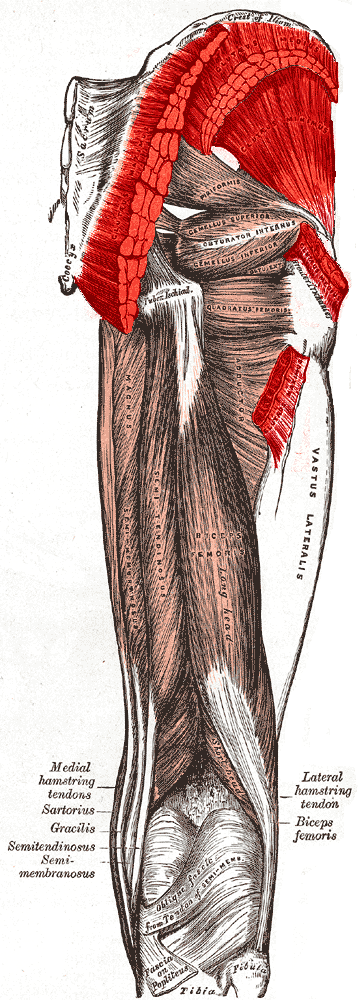
Image credit: Häggström, Mikael (2014). "Medical gallery of Mikael Häggström 2014"
Beneath the gluteus maximus sit the short (or deep) hip external rotators, including the piriformis, obturator internus and externus, gemelli, and quadratus femoris. These muscles primarily rotate the thigh outward when the hip is near neutral or extended. They also help stabilize the head of the femur in the hip socket — somewhat like how the rotator cuff muscles stabilize the shoulder. Their action can change slightly depending on hip position (for example, some become internal rotators when the hip is deeply flexed).³
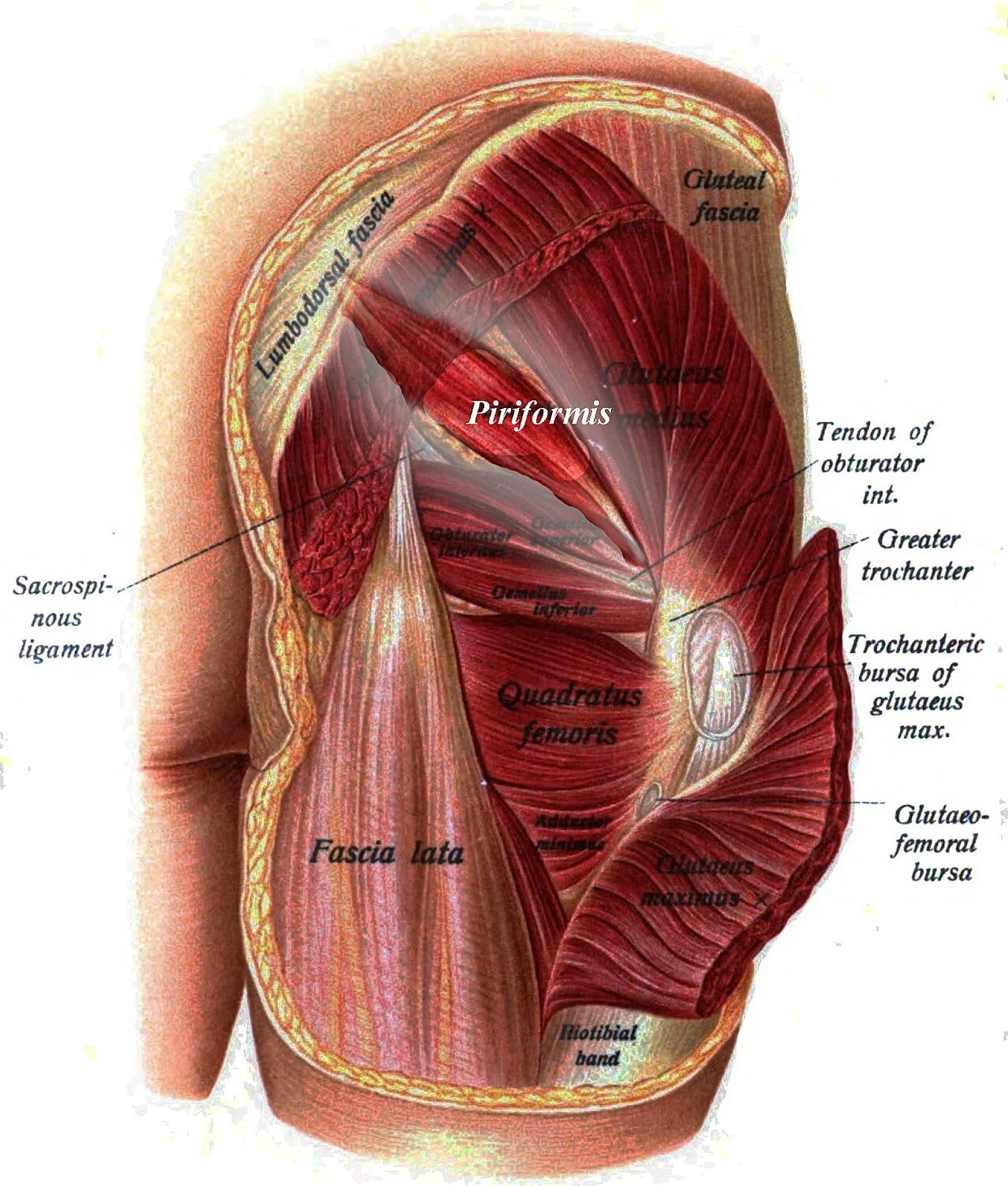
Image credit: Johannes Sobotta - File:Sobo_1909_295.png
Together, these muscles control three planes of motion at the hip and provide dynamic stability so the pelvis and lower limb stay well-aligned under load.
How Weakness Affects Alignment and Contributes to Pain
When the glutes and hip rotators are weak or delayed in activating, the body compensates. Common mechanical consequences include:
The pelvis dropping on the opposite side during single-leg stance.
Excessive inward collapse of the thigh (hip adduction and internal rotation).
Resulting “knock-knee” or valgus positioning at the knee.
Increased inward rolling (pronation) at the foot and ankle.
These altered mechanics increase stress on joints and soft tissues.
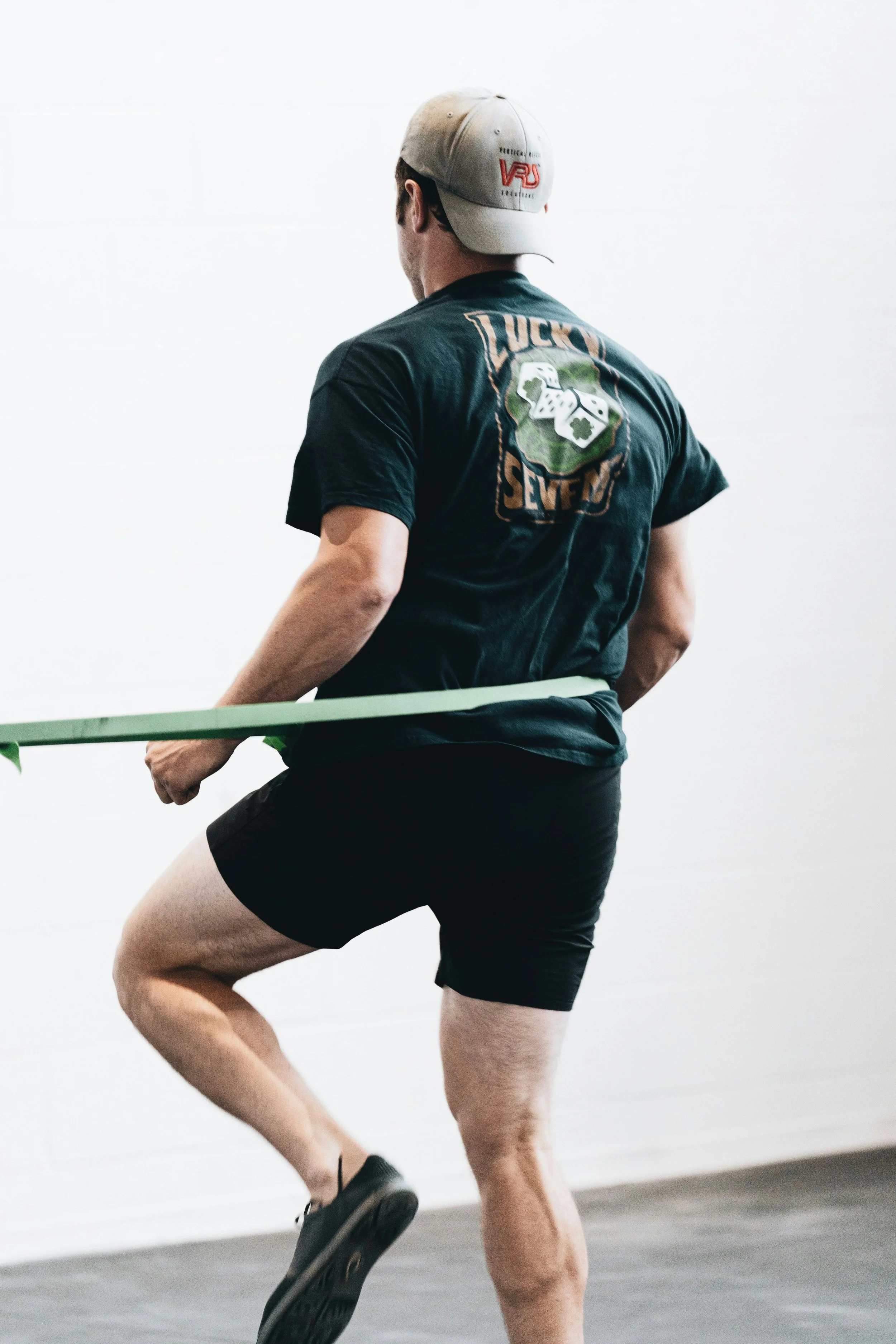
Image credit: Logan Weaver via Unsplash.com
Low back pain
A 2019 systematic review of 24 studies (involving over 2,000 participants) found that people with low back pain tended to have reduced gluteus medius strength and more trigger points in that muscle compared with people without low back pain. Dysfunction here can increase loading on the spine and reduce pelvic stability. Other reviews note that hip muscle strengthening exercises, can improve pain and disability in people with non-specific low back pain. The connection is biomechanical: poor pelvic control forces the low back muscles and joints to work harder to keep you upright.⁴
Hip pain
The same muscles that stabilize the pelvis also stabilize the hip joint itself. Weakness can contribute to altered loading across the hip, including greater compressive or shear forces in certain positions. Research on hip abductor function shows these muscles help resist unwanted rotation and distraction of the femoral head in the socket.
Knee pain (especially around the kneecap — patellofemoral pain)
Multiple systematic reviews and meta-analyses show that people with patellofemoral pain commonly have weaker hip abductors and external rotators. Weakness allows greater hip adduction and internal rotation during weight-bearing activities (squatting, running, stair climbing). This changes how the kneecap tracks in its groove and increases pressure under the kneecap.⁵
Importantly, strengthening the hip abductors and external rotators has been shown in randomized trials and meta-analyses to reduce knee pain and improve function — often more effectively than, or in addition to, exercises focused only on the knee. Delayed or shorter-duration gluteus medius activity has also been observed during functional tasks in people with this type of knee pain.⁶
Foot and ankle pain (including plantar fasciitis / plantar heel pain)
The kinetic chain continues downward. Excessive femoral internal rotation and knee valgus from proximal weakness promote increased foot pronation. This can overload the plantar fascia (the thick band of tissue on the bottom of the foot that supports the arch). Studies have found reduced strength in hip abductors and external rotators on the affected side in people with plantar fasciopathy compared with the unaffected side or healthy controls. Case reports and intervention studies have shown that adding hip-strengthening exercises can improve heel pain and function when hip weakness is present.⁷
Why Strength and Stability Matter
Strong, well-timed gluteal and hip rotator muscles:
Keep the pelvis level and the thigh properly positioned under the body.
Reduce compensatory stress on the lumbar spine, hip joint surfaces, kneecap, and plantar fascia.
Improve force distribution so everyday activities and exercise place less abnormal load on pain-sensitive tissues.
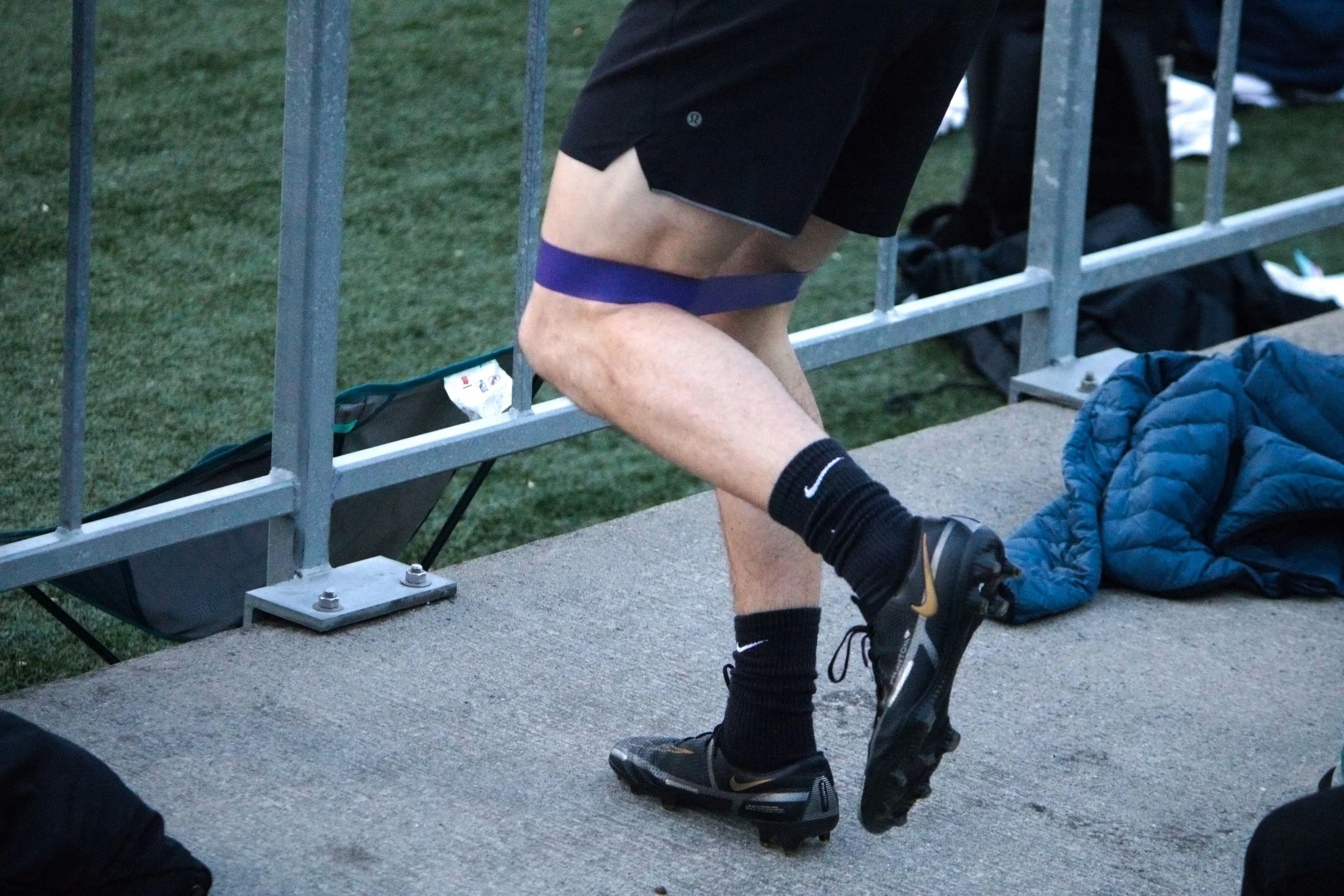
Image credit: Danielle Claude Belanger via Unsplash.com
The research describes associations and supportive biomechanics more than absolute “cause and effect” in every individual. Pain is multifactorial, and not every person with weak glutes will develop pain, nor will every person with pain have weak glutes. Still, the consistent findings across systematic reviews make assessment and targeted strengthening of these muscles a logical and evidence-supported part of care for many patients with these common complaints.
What This Means for You
If you have ongoing low back, hip, knee, or foot/ankle pain, a thorough physical therapy evaluation can identify whether gluteal or hip rotator weakness or poor control is contributing. Treatment is individualized — it may include specific strengthening, neuromuscular re-education (teaching the muscles to fire at the right time), movement retraining, and addressing any related mobility or soft-tissue issues.
At Precision Osteopractic Physical Therapy, we focus on restoring efficient mechanics so your body can move with less pain and greater resilience. Osteopractic care pairs evidence-based exercise with skilled hands-on treatment, including spinal and extremity manipulation, dry needling, and manual therapy. For pain driven by the hips, that might mean dry needling to ease a guarded gluteus medius or piriformis, manipulation to restore motion at a stiff low back, pelvis, or hip, and then a progression of exercises that builds the strength and timing to hold those gains. The hands-on work reduces pain and opens a window for better movement. The exercise makes the change last.
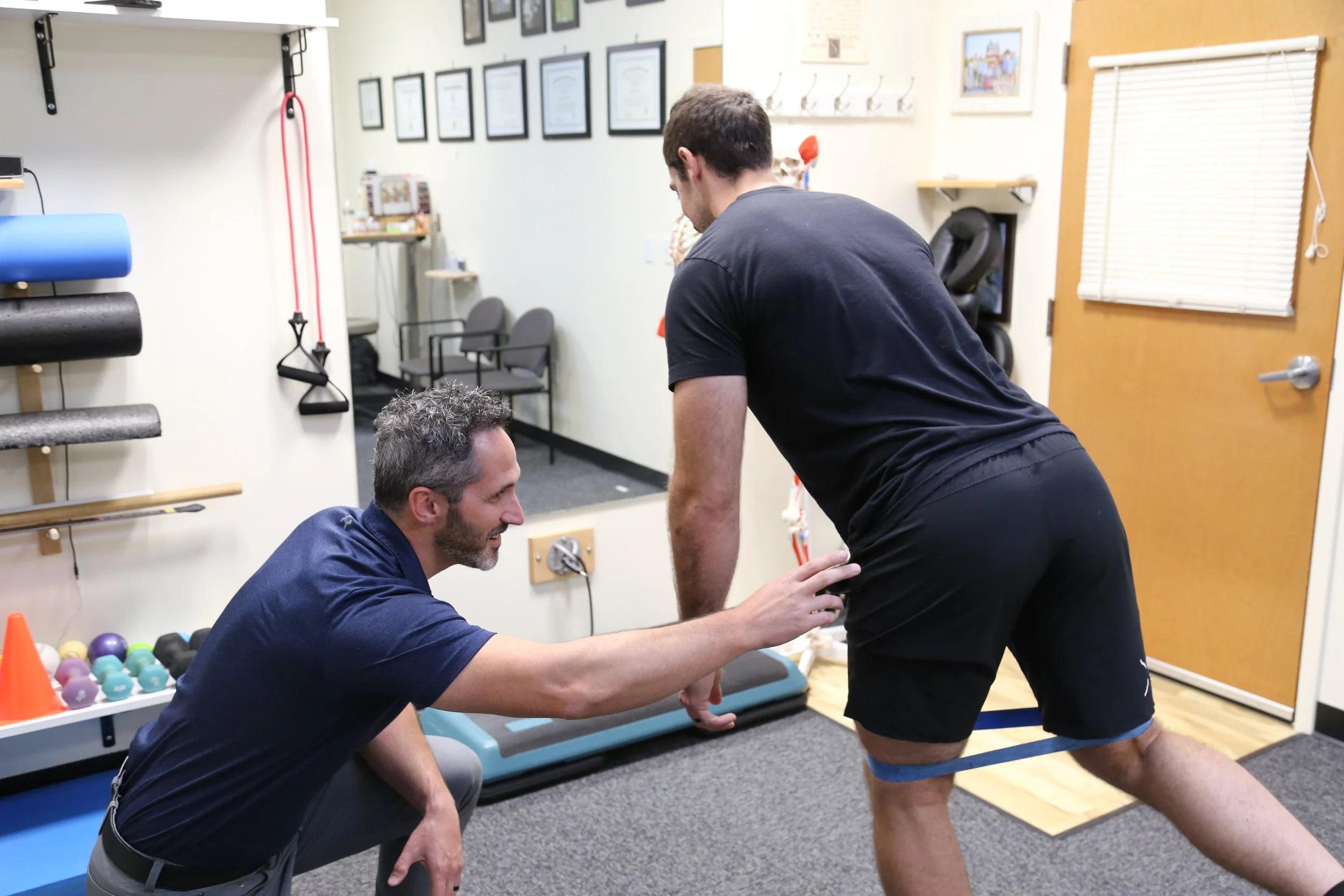

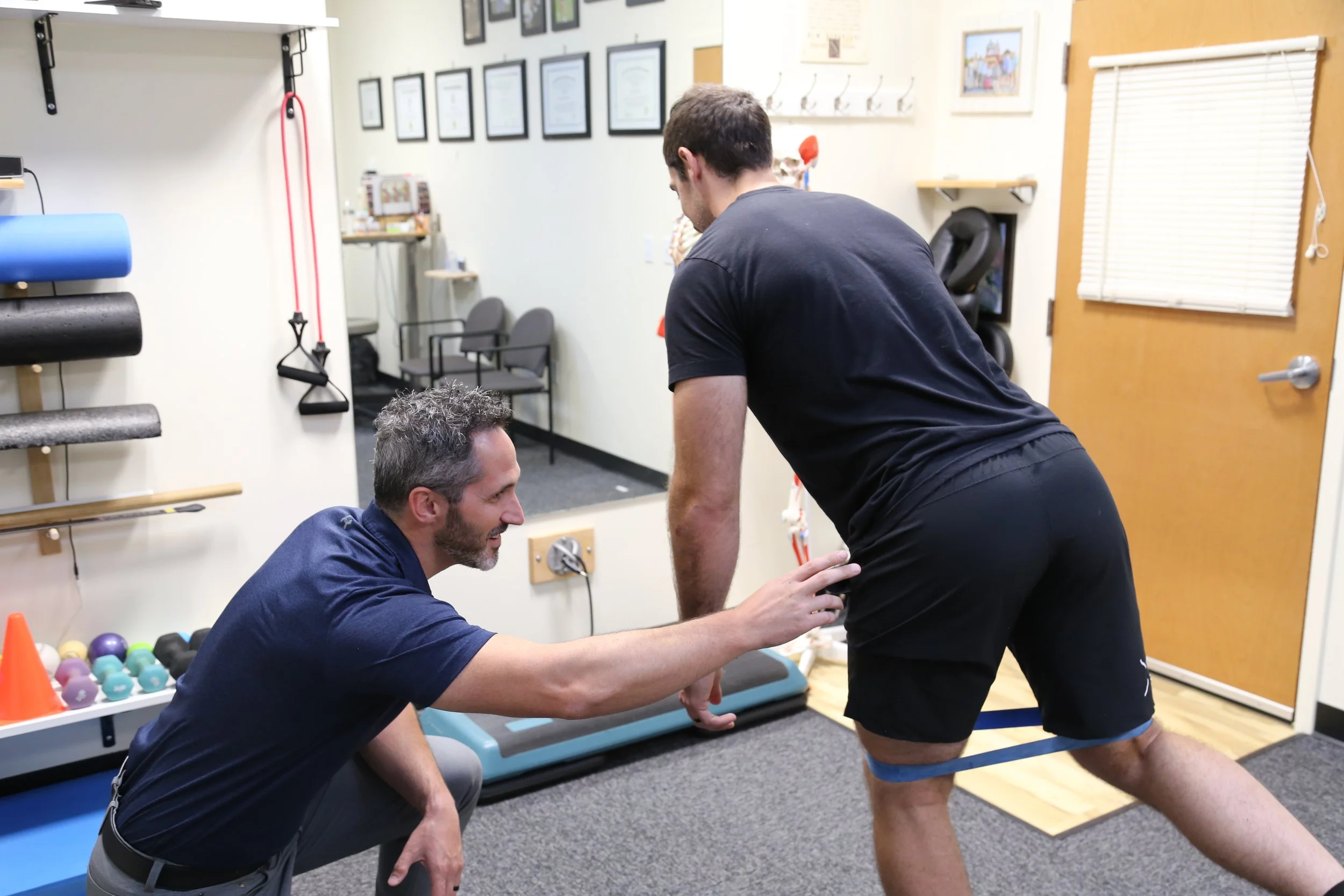
Dr. Mike uses expert cues to facilitate gluteus medius activation.
A stronger, more stable “butt” really can help solve a surprising number of problems farther up and down the kinetic chain! If your back, hip, knee, or heel has been nagging at you, book an evaluation with one of our osteopractic physical therapists. Online self-scheduling is quick and easy at precisionopt.com, with appointments in both Lebanon and Hanover.
Mike Nash, PT, DPT, LMT, FAAOMPT, Dip Osteopractic, Cert DN, Cert SMT